







Vacuum Pump for CO2 Detectors
2025-08-22 00:02:46
With the increasing severity of global climate change, there is growing concern about the concentration and distribution of carbon dioxide (CO2). CO2 is an important greenhouse gas that absorbs heat from the Earth's surface and reflects it back to the Earth, thus it plays an important role in maintaining the Earth's temperature balance. The increasing human activities and the simultaneous rise in CO2 emissions have led to a gradual increase in CO2 concentration, which has led to a series of environmental and health problems.

Elevated carbon dioxide concentrations can trigger global climate change, leading to sea level rise, climate anomalies, and a host of other problems. Secondly, high concentrations of carbon dioxide can also cause some harm to human health. When the concentration of carbon dioxide in indoor air exceeds 1,000 ppm, it will cause the human body to feel headache, drowsiness, lack of concentration and other symptoms, and in serious cases, it will even lead to poisoning and respiratory diseases.
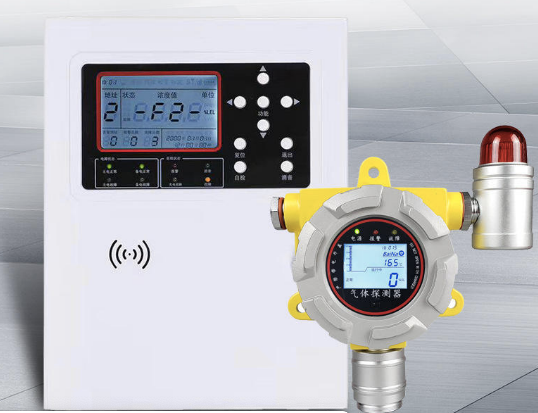
In response to these problems, a series of measures need to be taken to reduce the concentration of carbon dioxide. A carbon dioxide detector is an important tool to understand and control the concentration of carbon dioxide. Through the instrument can be timely understanding of indoor or outdoor air carbon dioxide concentration, and take appropriate measures to protect human health and environmental safety.

As an instrument that can quickly and accurately detect the concentration of CO2 in the air, the CO2 detector is widely used in the fields of environmental protection, climate change research, and indoor air quality monitoring. The analyzer works mainly by detecting the concentration of CO2 in the air. Usually, the detector will use chemical sensors, infrared sensors, and other technologies to achieve the detection of CO2 concentration.
Working Principle:
Air extraction: the detector will use a vacuum pump to extract air into the instrument. This process requires the vacuum pump to have a high pumping capacity in order to quickly pump the air into the instrument.
CO2 Detection: When the air enters the instrument, it will be detected by the CO2 sensor, which uses the principles of chemical absorption and infrared light to detect the concentration of carbon dioxide in the air and convert the detection result into an electrical signal output.
Data processing: The detector will process the electrical signal output from the sensor, calculate the data of CO2 concentration, and display the result on the screen of the detector or output it to other devices.
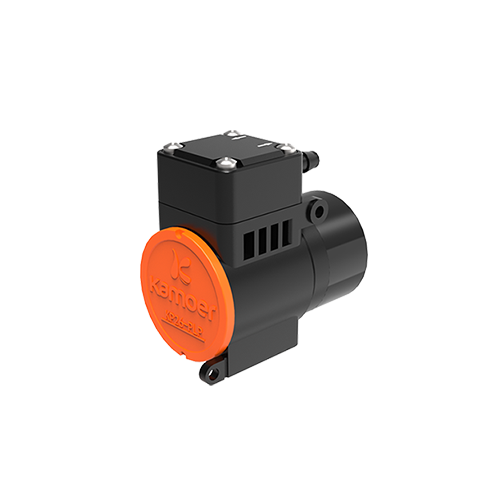
In the carbon dioxide detector, the Kamoer KVP15 vacuum pump can help the instrument detect the carbon dioxide concentration in the air quickly and accurately. This product is made of high-quality materials and a precision machining process, which makes it have high advantages in terms of service life, operation stability, and noise. When an air sample passes through the detector, a vacuum pump pumps the air into the instrument and compresses it into a gas within a certain pressure range. This process requires an efficient vacuum pump to ensure the extraction and compression of the gas. The advantages of the KVP15 vacuum pump with high negative pressure (series negative pressure ≤ -0.092MPa) and high flow rate (parallel flow ≥ 13L/min) are exactly the ideal choices that can satisfy this demand.
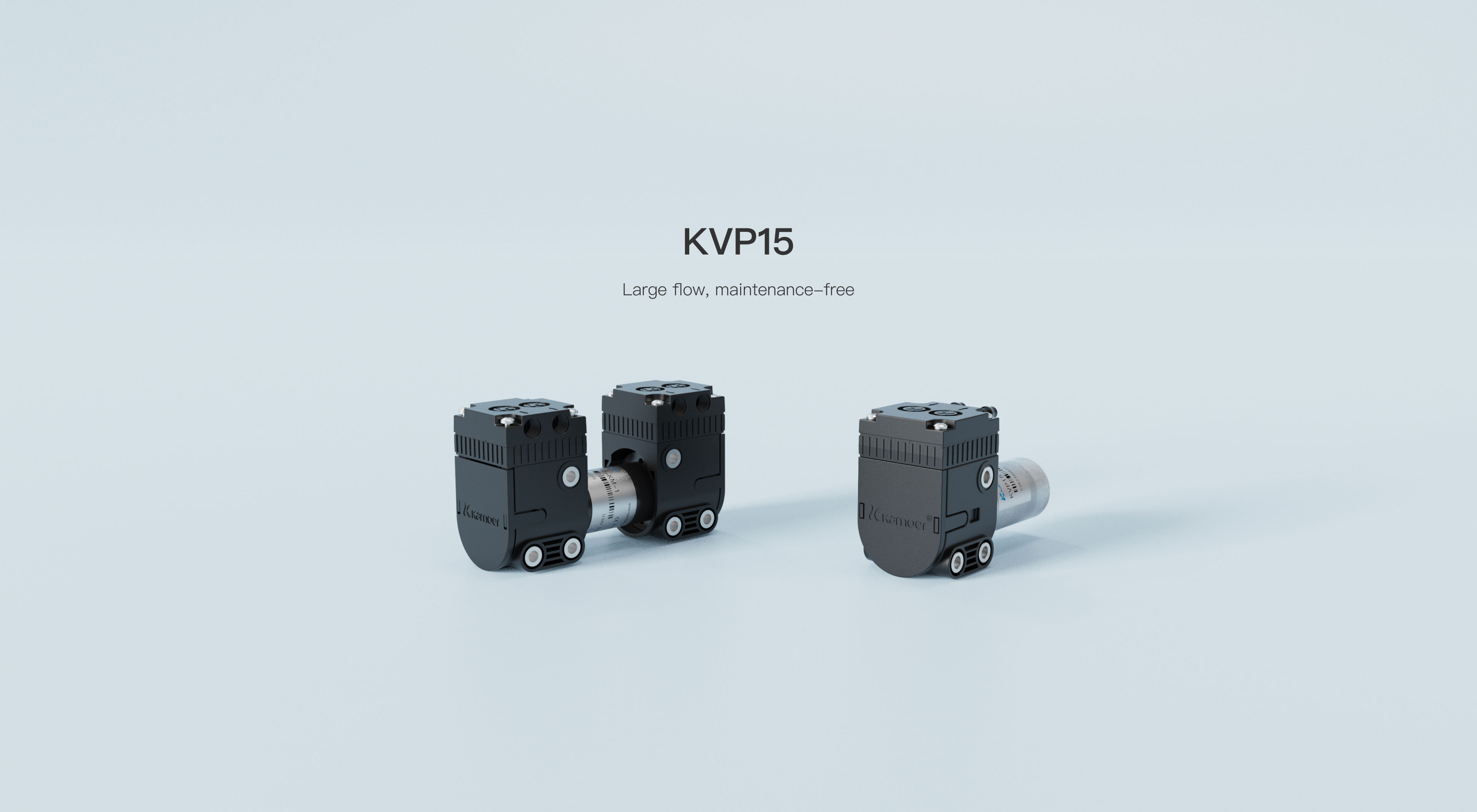
In addition to its efficient and stable performance, the KVP15 vacuum pump has a small, maintenance-free footprint, which allows it to be easily integrated into a CO2 detector without taking up too much space or affecting the user experience. At the same time, the reliability of the KVP15 vacuum pump is well ensured, which can effectively reduce instrument failure rate and maintenance costs. Kamoer vacuum pump KVP15 is a reliable, efficient, and compact vacuum pump, which is suitable for applications such as carbon dioxide detectors and other instruments that require fast pumping. Its excellent performance and stability can help the instrument to obtain more accurate measurement results, which is important for research and exploration in fields such as environmental protection and climate change.
Kamoer has many years of experience in the application of fluids in the medical, laboratory, and other fields, providing many customers with accurate and reliable fluid transfer solutions, and providing competitive and high-quality products for many industry segments. Kamoer will provide comprehensive quality assurance and looks forward to bringing you better service!

Related Products